Why SAP API Policy v4 Makes Clean Core a Practical Prerequisite for Enterprise AI
A new SAP policy reads like developer governance. Read against the agentic AI shifts of the last eighteen months, and against what SAP Business AI actually ships, it is something else.
In April 2026, SAP published API Policy v4/2026. On the surface it reads as a developer governance update. Only APIs published on the SAP Business Accelerator Hub or in product documentation can be consumed. Internal, private, and non-published APIs are explicitly off-limits. No global grace period. No carve-out for systems on Public Cloud, Private Cloud, or BTP.
It is being read as a policy update. Read against what has happened in agentic AI over the last eighteen months, it is also one of the more concrete answers SAP has given to a question every CIO is asking: what does enterprise-grade agentic AI actually look like when the abstractions hit the ground?
A reading frame: Pull and Push
I think about the agentic AI market through a frame I call Pull and Push. It is a personal lens, not industry vocabulary.
On the Pull side sit the model providers. Anthropic, OpenAI, Google. Their strategy is to put the frontier model at the centre and pull apps, data, and tools inward through connectors, agents, and the Model Context Protocol. The user’s home is the chat surface, the API, the agent loop.
On the Push side sit the application incumbents. SAP, Salesforce, Adobe. Their strategy is to keep the application at the centre and push frontier models into the platform as embedded copilots and domain agents. The user’s home stays inside the system of record. Data gravity is the moat.
Microsoft is the most interesting case the frame does not fully capture. Through its OpenAI investment it is a Pull-side participant. Through Office, Dynamics, and Teams it is a massive Push-side incumbent. Most of the strategic moves you will see from Microsoft in 2026 read as both, depending on which surface you are standing on. The frame is a lens, not a taxonomy.
API Policy v4 is the most disciplined Push move I have seen in 2026. It does not announce a new feature. It defines what is allowed inside the system.
Pull and Push: how AI platform power is splitting in 2026
Pull → model as platform
← Push, app as platform
Where they meet: governed protocols
What the policy actually says
The policy formalises something SAP has been signalling for two years. New developments and extensions consume only Published APIs. Non-compliant integrations are now considered at-risk, because SAP reserves the right to change or decommission internal APIs in any release cycle without notice.
Where a published API does not exist, the recommendation is to wrap the gap on BTP, request the API through the SAP Customer Influence portal, or wait.
This is not a surprise to anyone who has been tracking the Clean Core message since 2024. What is new is that the language has hardened. Clean Core is no longer aspirational guidance. It is contractual.
Why the timing matters
Read in isolation, the policy is a maintenance announcement. Read against what happened on the Pull side between November 2024 and April 2026, it is something else.
In that window, the Model Context Protocol moved from a single-vendor specification to a widely adopted standard for how AI agents connect to enterprise systems. OpenAI adopted it in early 2025. Google DeepMind followed. Microsoft and AWS shipped MCP support across their stacks. The protocol was donated to the Linux Foundation’s Agentic AI Foundation in late 2025. Thousands of public MCP servers exist as of early 2026. Competing protocols and vendor-specific extensions still exist, but MCP is the closest thing the agentic ecosystem has to a common wire protocol today.
The practical consequence is that any agent can now knock on any door. The cost of integrating an AI workflow with a business system has collapsed. What used to take a custom connector now takes a server registration.
That is precisely why SAP’s policy matters. When the cost of integration falls, the question of which integrations are sanctioned becomes the question. Policy v4 is the Push side’s door policy for the agentic era.
Clean Core in four levels
SAP has been refining the extensibility model alongside the policy work. The current framing classifies extensions across four levels.
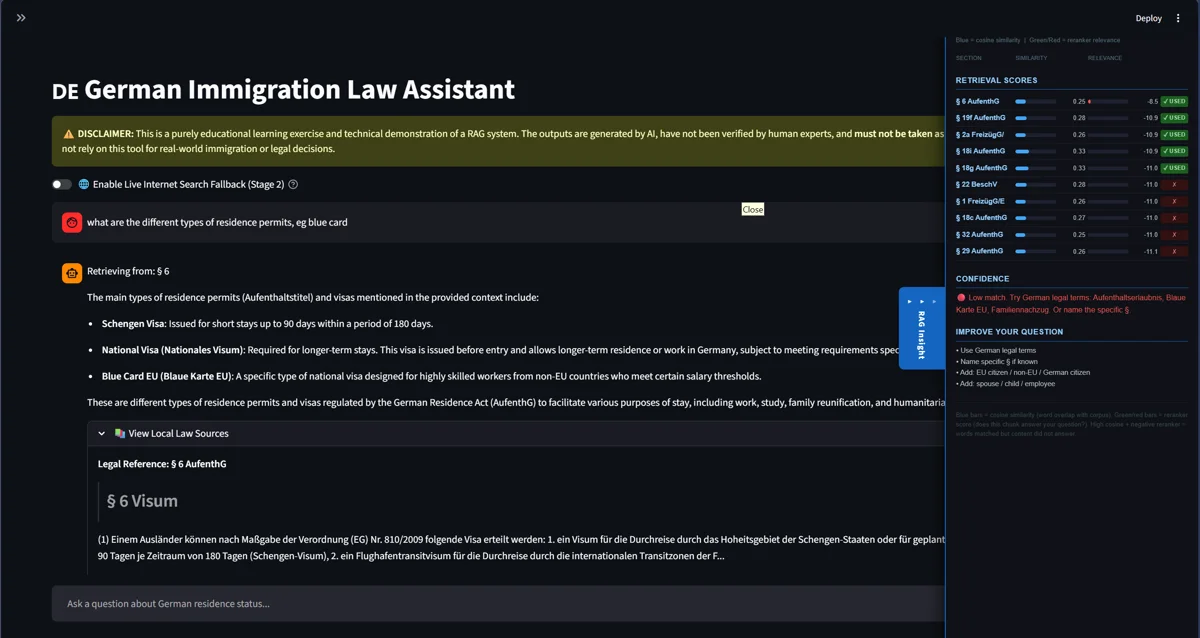
Level A uses only released APIs and is fully upgrade-safe. It is the target for all new development. Level B uses classic APIs such as BAPIs, permitted with governance approval. Level C reaches into internal objects, carries upgrade risk, and requires a remediation plan. Level D covers direct modifications and is a retirement candidate.
Read this carefully and the AI implication is unambiguous. A customer running mostly Level A is ready for Joule agents and for Pull-side agents that connect through MCP, because the surface those agents touch is contractually stable. A customer running mostly Level C and D is not ready, regardless of how good the model is, because the agent’s behaviour cannot be guaranteed across an upgrade.
One qualification matters here. AI on enterprise data does not only run through transactional APIs. Real production AI also runs through data lakes and replicas, event streams, semantic layers, and embeddings sitting alongside the system of record. A company with a messy core but a strong data platform can deploy useful AI workflows on its data without ever calling an SAP transaction. Clean Core is the prerequisite for in-system agentic action specifically, not for AI value broadly. The two are easy to conflate and worth keeping separate.
For in-system action, though, Clean Core is no longer a code quality conversation. It is the prerequisite.
Where Joule stands in 2026
The Push strategy is not theoretical. SAP has been building it for two years. Joule is the umbrella brand spanning a conversational assistant, separate workspaces for developers and consultants, a library of pre-built skills, and an orchestration layer for multi-step agents. Joule Studio lets enterprises and partners build custom agents grounded in their own SAP context.
The architectural pieces are credible. Adoption is the part that is lagging. Joule is generally available on RISE with SAP and GROW with SAP, with limited or no parity on on-premise installations. Pricing runs through SAP AI Units with a minimum package that puts a floor on entry cost regardless of usage. Mainstream maintenance for ECC 6.0 ends in 2027, with extended maintenance available through 2030. Migration timelines are concrete, but they are still migration timelines. Customers who have not moved by now are unlikely to be the earliest Joule adopters once they do.
What this means for the argument so far is straightforward. The Push strategy is well-architected and well-funded. Push adoption is mostly forward-looking. When this post argues that API Policy v4 makes Clean Core a procurement criterion, it is describing the architectural decision the next eighteen months will turn on, not the state of the installed base today.
Collaboration through governed protocols
The lazy framing for the rest of 2026 will be that Pull and Push are at war. That framing misses what is actually happening.
SAP itself is shipping MCP-compatible interfaces. An ABAP MCP server is in the 2026 roadmap for Joule for Developers. The agent-to-agent protocol that underpins SAP AI Agent Hub is explicitly designed to work across SAP and non-SAP agents. Joule is being positioned to operate alongside, not in opposition to, agents built on the Pull side. The generative AI hub in SAP AI Foundation now offers Claude Opus, Claude Sonnet, GPT, and Gemini as model choices for grounding Joule on customer-specific contexts.
The pattern that is emerging is not generalist orchestrators against sovereign systems. It is generalist orchestrators talking to sovereign systems through standards that both sides accept.
API Policy v4 is the Push side of that conversation. MCP is the Pull side. Read together, they describe a future in which the agent does not need to understand SAP. It needs to understand which doors are open and what governance applies on the other side. The work of designing that interface, deciding which agent owns which decision, where the audit trail lives, and how data leaves and returns, is not going away. It is the work.
What it means in practice
For finance and operations leaders evaluating AI vendors, the first question is no longer about the model. It is whether your S/4HANA system is on a Clean Core trajectory. If it is not, the in-system AI roadmap is constrained before the procurement conversation starts.
For SAP architects, Level A has graduated from preference to procurement criterion. Custom code assessments and remediation plans are now AI readiness plans by another name.
For startups and product teams building on top of SAP, the policy is both a constraint and a clarification. The published API surface defines the addressable problem. What that means in practice is harder than it sounds.
Getting an API published is not a shortcut. The official path runs through the SAP Customer Influence portal, where requests need to clear a voting threshold to be considered. Pass rates are low, delivery is not guaranteed even when a request clears, and the cycle from accepted request to released API can run several quarters. Building a roadmap around a future API is a slow bet.
The pragmatic options for a startup automating SAP S/4HANA with proprietary tools are roughly four.
Map first, build second. The SAP Business Accelerator Hub catalogues thousands of released APIs across Finance, Procurement, Supply Chain, and HR. Many capabilities that look missing already exist under unfamiliar names. The first move is a serious mapping exercise against this catalogue. It costs a week and saves quarters.
Wrap the gap on BTP. Where no released API covers the use case, deploy your logic as a BTP-native extension using ABAP Cloud or CAP. The wrapper consumes whatever SAP exposes and presents your product with a stable contract. This moves non-compliance out of the SAP core into a managed layer that survives upgrades. It is the architecture SAP itself recommends for this exact gap.
Become a partner. The SAP PartnerEdge program and the SAP Integration and Certification Center give certified partners a defensible path to integrate, distribute through SAP Store, and co-sell. Partner status is also how a startup gets product management attention on missing APIs faster than the public voting queue.
Engage co-innovation. The SAP Customer Engagement Initiative offers a slower but genuine route into product roadmaps. Useful for startups with deep domain expertise SAP does not currently cover, where the conversation is about strategic fit rather than feature voting.
The SAP-as-platform reality has not changed. What has changed is that fighting it is now explicitly unsupported, while working with it is more clearly documented than at any point in the last decade.
If you are running an AI strategy review in 2026 and Clean Core has not entered the conversation, you are reviewing the wrong question.
© 2026 Arnav Amal Ray. All rights reserved.